Gardening for the Soul Series Part 3: A Fruit Extravaganza!

Gardening for the Soul…

My raspberries are the largest they’ve ever been (like 8 feet tall), that even with trying to support them as I usually do (stakes and garden tape), they flopped over. The bees are busy, and I hope I can make it through this jungle to pick berries in September!

Here I am, in my small corner of the world, smack-dab in the middle of Massachusetts. This five-part blog series is for anyone who finds nature feeds their soul and for whom may want to learn a bit more about setting up vegetable, fruit, and flower gardens.

My experience: I’ve been obsessing over flower gardens for fifteen years, my berries/apples for about seven years, and I’m relatively new to vegetables, four years in now (thanks to impulse pandemic gardening). I only know what I know. My background is in science, and I now write novels full-time. The way I garden is only one way. I am no expert, but feel free to glean whatever information you can from my series…

Let’s talk about fruit (more coming on harvesting veggies in the fall)!

Let’s jump into Fruit 101:

Always know your grow zone and sun location. You’re getting tired of hearing this, aren’t you? But even fruits have preferred locations. My fruits are all planted on the western side of my property where they also get southern sun. Some also require more acidic soils as well. I’m calling this my 101 because these are the basics I’ve learned about the fruits I grow. I am still learning so as always take my advice with a grain of salt.

Apples –

Apple trees are an investment in time, space, and money. Do a little research at your local nursery before purchasing. I have a Macoun tree and Golden Delicious tree. Some years you’ll yield a bounty of apples! Some years, none. Some years, the four-legged critters eat them all. They need to be well-spaced to allow for growth, pruned as needed to put more energy into apples rather than foliage (I did a big prune this year - ouch - but the apples came back after a year off!), and you should grow at least two varieties—they need cross-pollination. I’ve had to also use food-friendly sprays to eliminate fungal growth (causes the leaves to spot and drop early) and caterpillars nibbling on the tree. This year - I had hundreds of baby apples - but with the rainy summer so many have dropped. I also did not spray them this year so the loss of so many apples could be from the stress of the pruning, an abundance of rain and storms, funguses, or disease. Hoping to yield a few dozen or so at this point. Like I’ve said before: Gardening is an experiment of trial and error. It can be tough when you love them so much!

Strawberries –

These can be grown in beds, rows, or pots. There are three kinds of strawberries: ever-bearing (slow and steady all summer), June-bearing (monster-sized crop early in June and the ones I see most at local nurseries), and day-neutral (usually two to three peak times throughout the summer). Little critters love to eat these! Netting may be needed. I’ve had trouble with these but got a cutting from a friend, planted it within my blueberry garden bed, and they are spreading nicely. Even got a berry or two. Stay tuned on how they fare next year! So far, I’ve not cut them back in the fall.

Blueberries –

Varieties include lowbush, highbush—the most common, rabbiteye, and half-high. Some are self-pollinators, some are cross-pollinating. Some require more pruning than others, too. Blueberries like more acidic soil and lots of sun and being planted near each other, and away from other fruits/vegs. I don’t usually cut them back in the fall, and each year they’ve gotten better and bigger (slowly!) for me. My strawberries are planted within the blueberries and the blueberries did very well this year, fruit-wise. I am unsure of my variety, but I have a lot of berries this year, but they are ripening rather slow. So something is working!

Raspberries –

ONE DAY’s picking in September.

Now, these are the king of my yard. I was gifted a handful of “canes” from a friend a few years back and they have taken over, needing constant maintenance to prevent their spread. They are like weeds…shooting out left and right. So if you want them to stay in your yard and not go into your neighbor’s, pull all those little spreaders up in spring…and summer! They are my September Glory. I love them! These monsters produce an abundance of berries each autumn (with a small June harvest). The soil and sun must be in a magical alignment (west and south sun). Raspberries can be ever-bearing like what I have, or June/Summer-only bearing. They like lots of sun and fertilizer. I also prune them down to 12-18 inches in the fall. The June fruits return on non-pruned (old growth) canes, and the autumn-growing (ever-bearing) fruit appear on new growth.

What to do with that wonderful bounty?

Besides eat them fresh, what else to do with that bounty of fruit? I freeze my berries to use later in the year in baked goods or smoothies, make applesauce (I make mine with half the skin on - less work - and all that fiber!), apple butter, and jams. So much jam! Frozen berries work in jams, too. You can also prepare apple pie filling and freeze it (or make pies to freeze). Pies, pancakes, cobblers, scones, sauces, custards, jams and jellies…the sky’s the limit with fruit!

Find the Expanded version of this blog as an article in “STILL MOMENTS MAGAZINE”

Have specific gardening questions? Drop me an email through my website contact form. Join me next time to talk about vegetable harvests and fall pruning/planting.

Gardening for the Soul Series Part 2: Setting up a Perennial Garden

Gardening for the Soul…

Here I am, in my small corner of the world, smack-dab in the middle of Massachusetts. This five-part blog series is for anyone who finds nature feeds their soul and for whom may want to learn a bit more about setting up vegetable, fruit, and flower gardens.

My experience: I’ve been obsessing over flower gardens for fifteen years, my berries/apples for about seven years, and I’m relatively new to vegetables, four years in now (thanks to impulse pandemic gardening). I only know what I know. My background is in science, and I now write novels full-time. The way I garden is only one way. I am no expert, but feel free to glean whatever information you can from my series…

Let’s talk about flowers!

Designing your garden comes with much artistic freedom so let’s begin with the basics.

Let’s start by drawing a map.

Draw your property and label compass directions. Add in tree locations, walkways, and the areas you’d like to have your garden beds. Do you want flowers lining a walkway, flanking shrubs, climbing a trellis, or bordering the house or a wall/fence? Do you have standalone flower bed options? Don’t forget to determine your planting hardiness zone.

Sun

South-facing gardens get the most sun exposure (“full-sun” flowers) and north-facing the least (“shade” flowers). Morning sun hits the east-facing gardens, and that bright, hot afternoon sun shines upon west-facing gardens (both can have partial to full-sun flowers). Do you have trees or other tall structures? Shade-loving or partial-sun flowers do well beneath them.

Bloom time

Planting flowers that bloom at different times will guarantee lasting colorful gardens through spring, summer, and autumn. Things to consider when choosing your flowers: How long do they bloom for? Do they bloom more than once? Do they need to be dead-headed or pruned?

Color and style

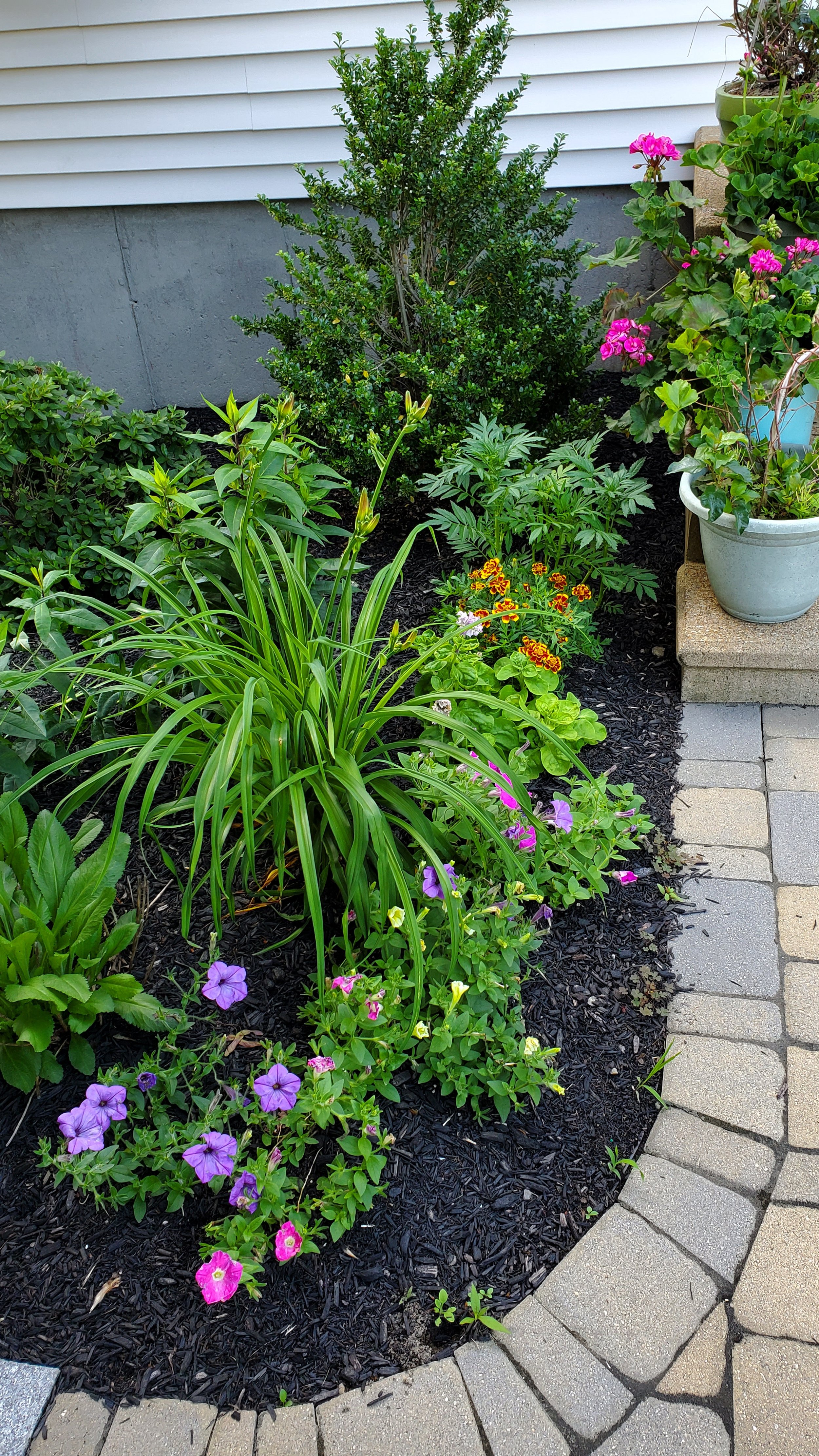
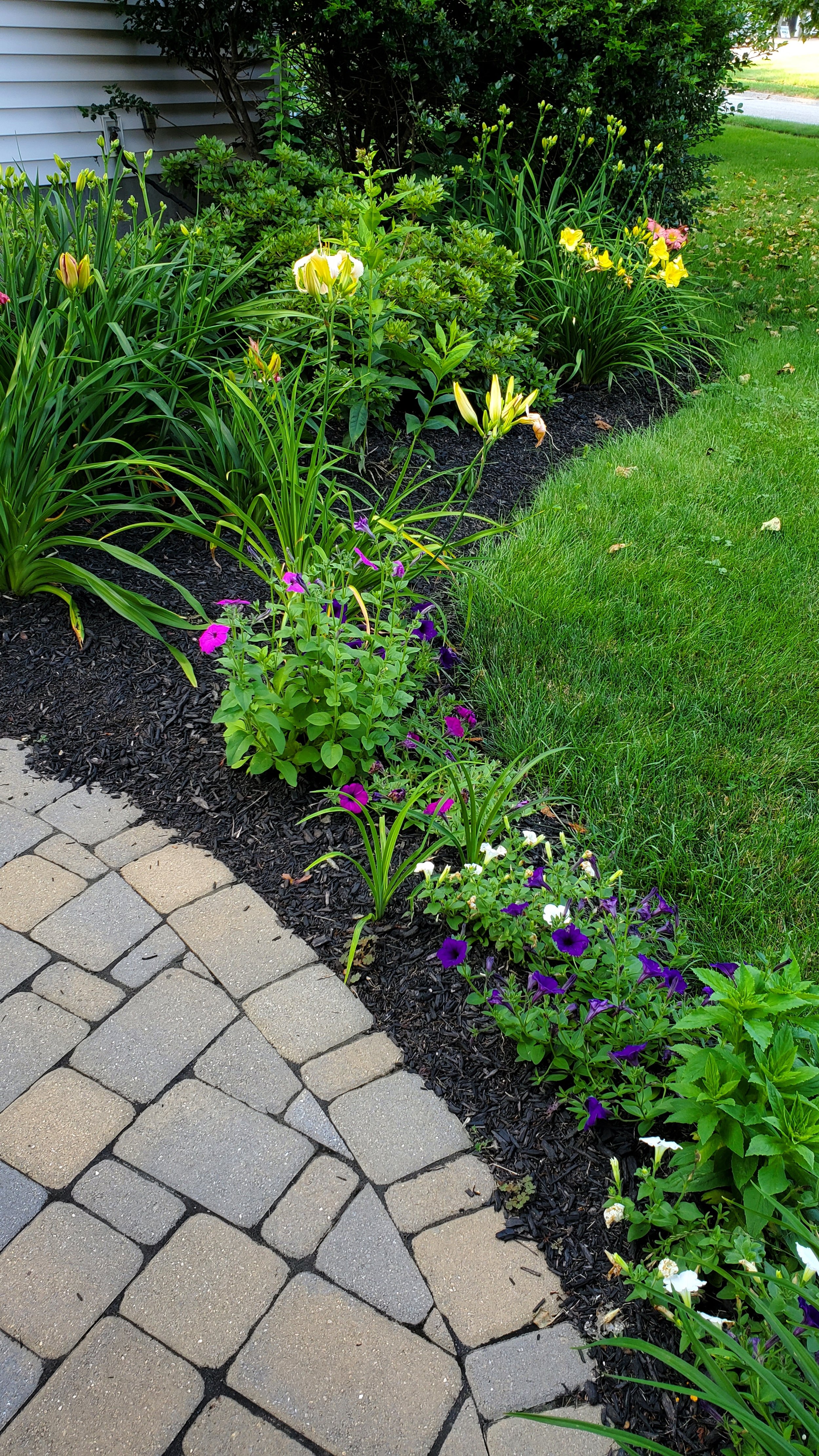
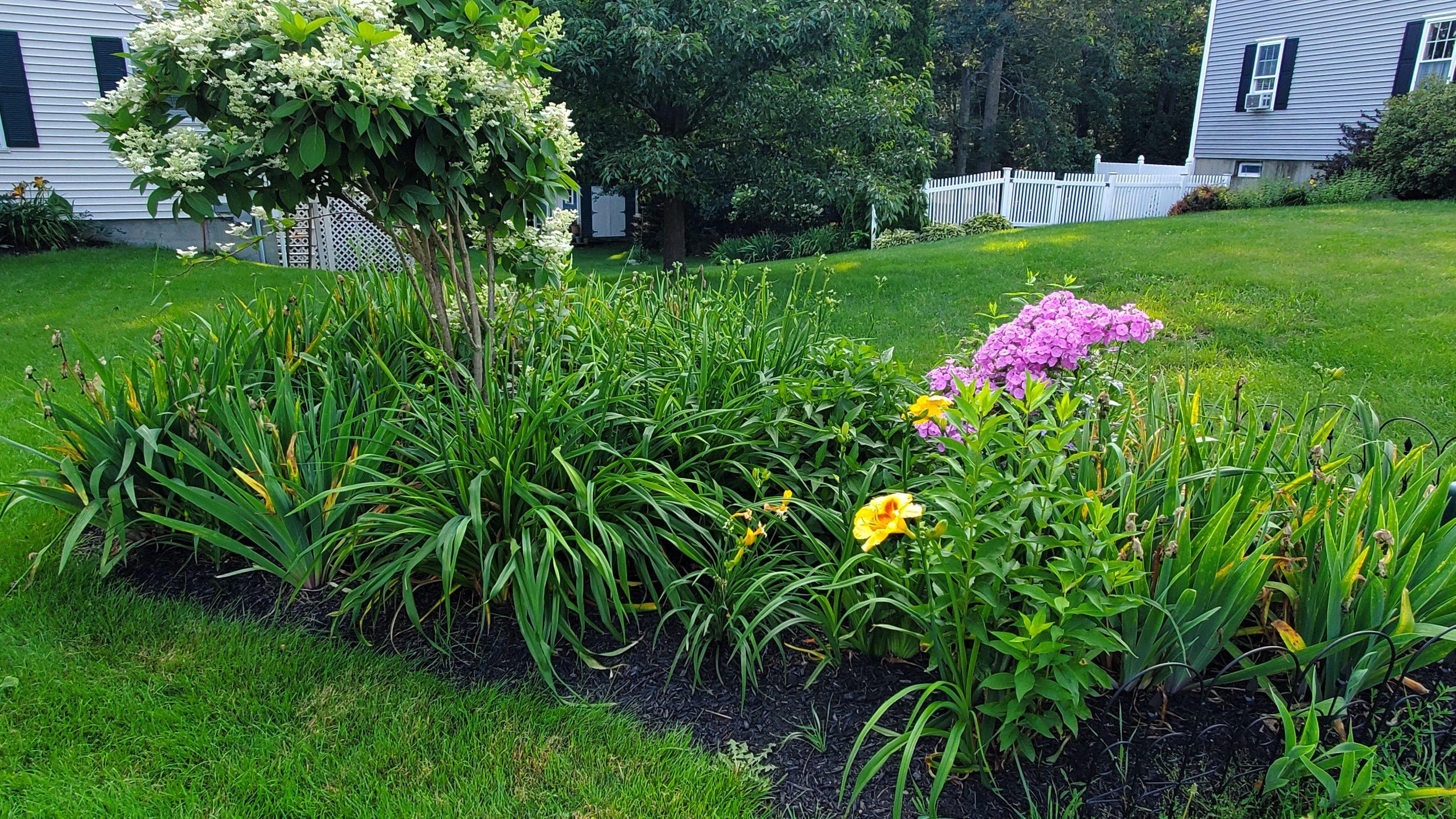
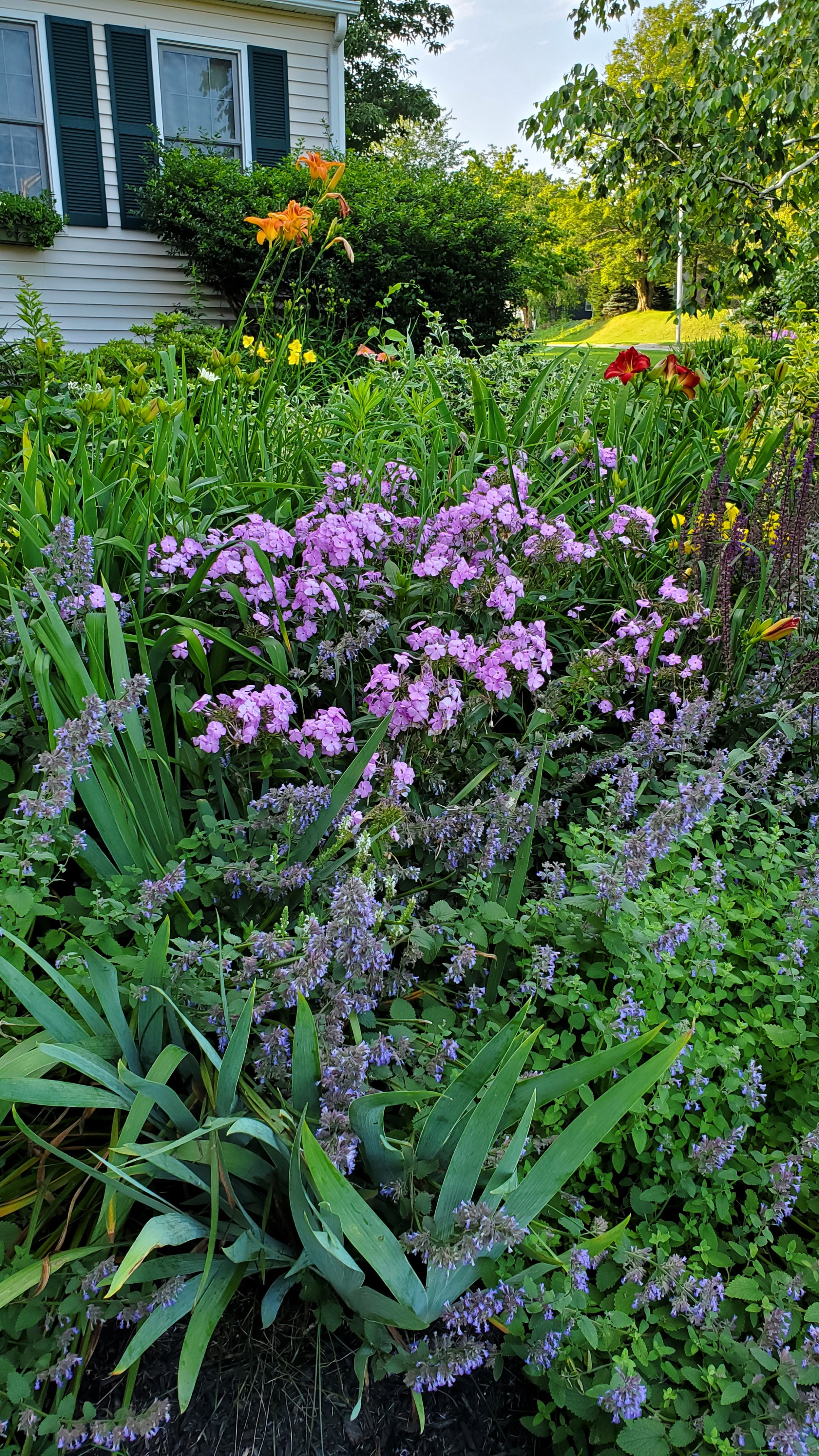
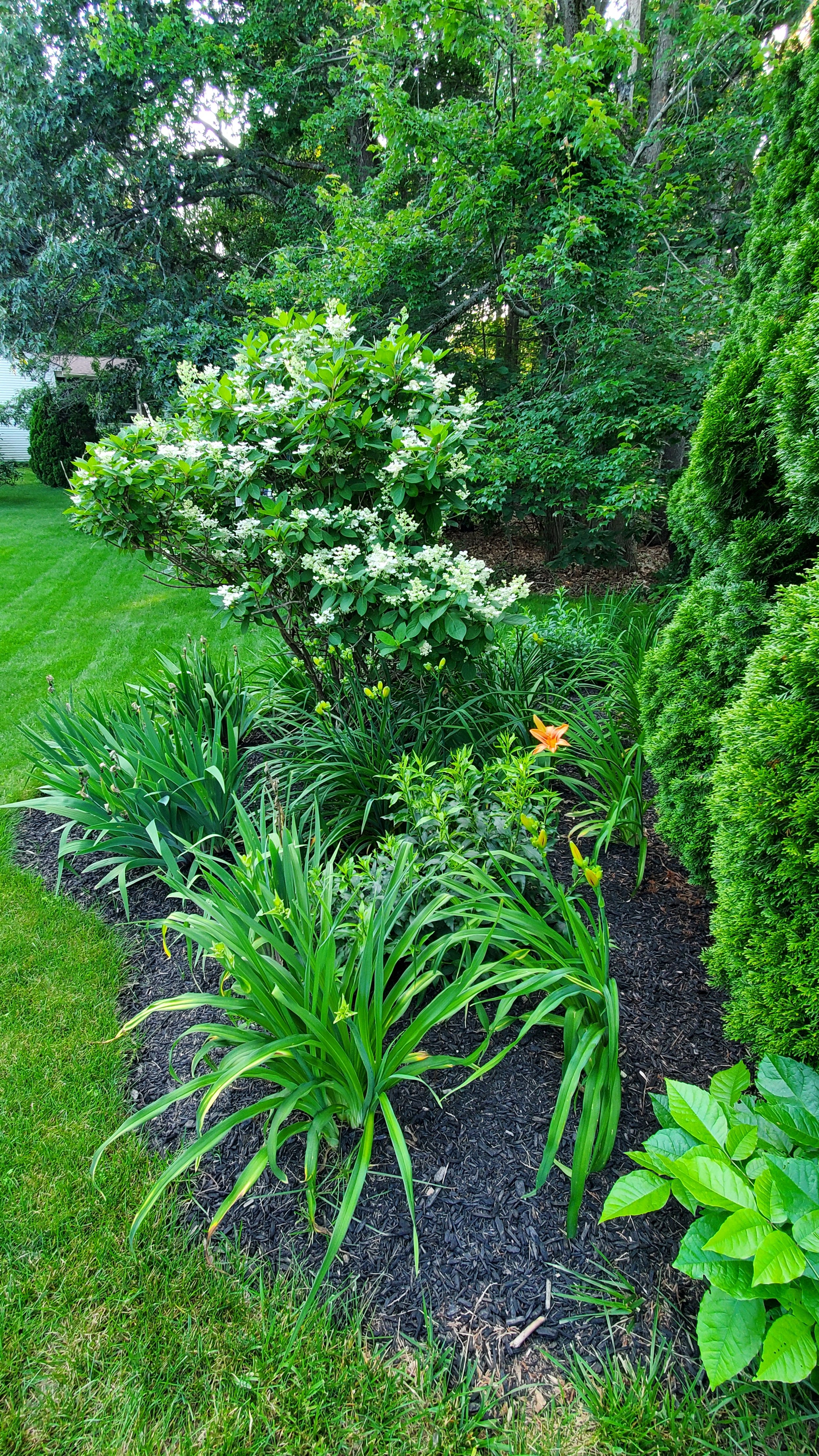
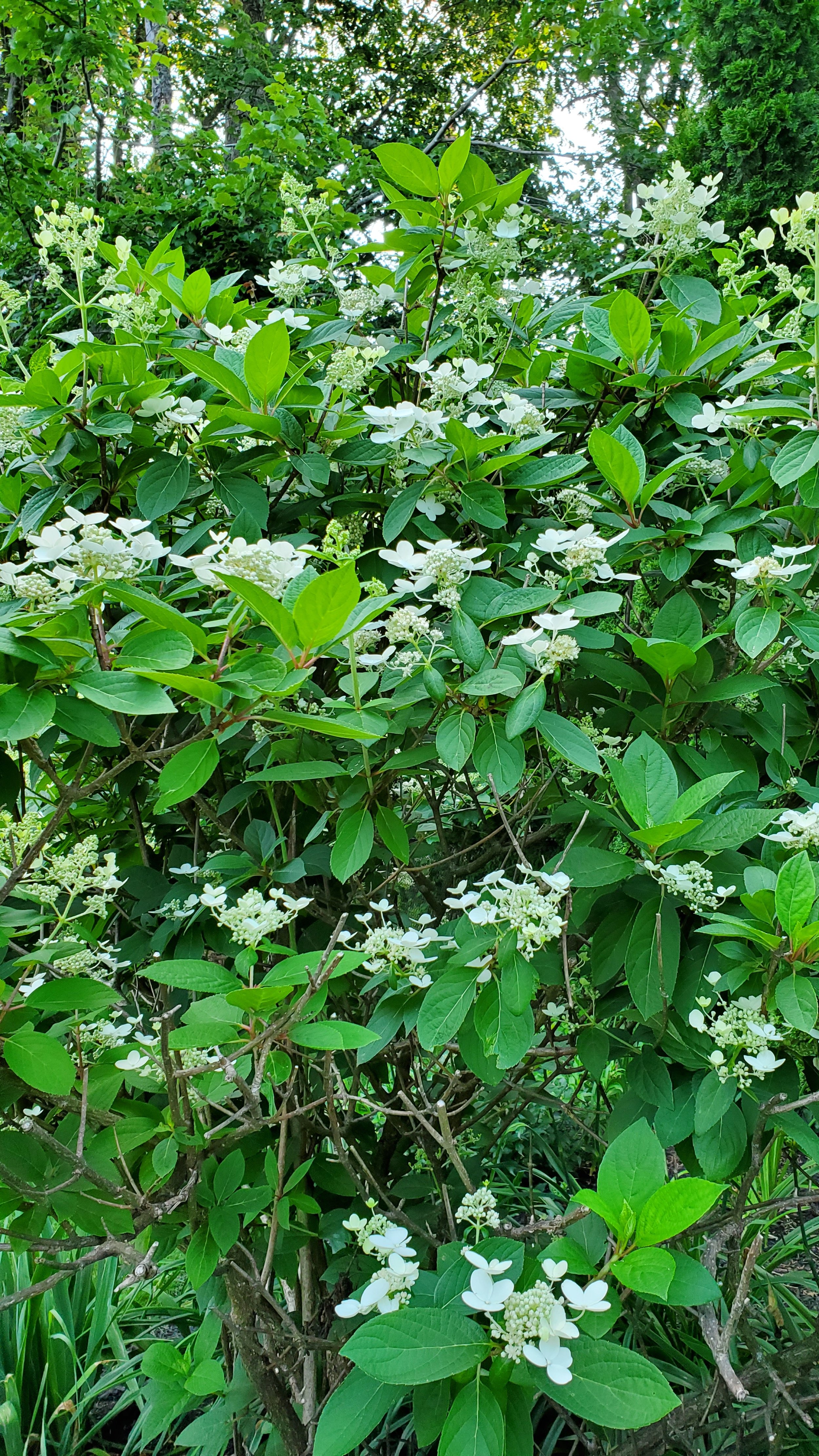
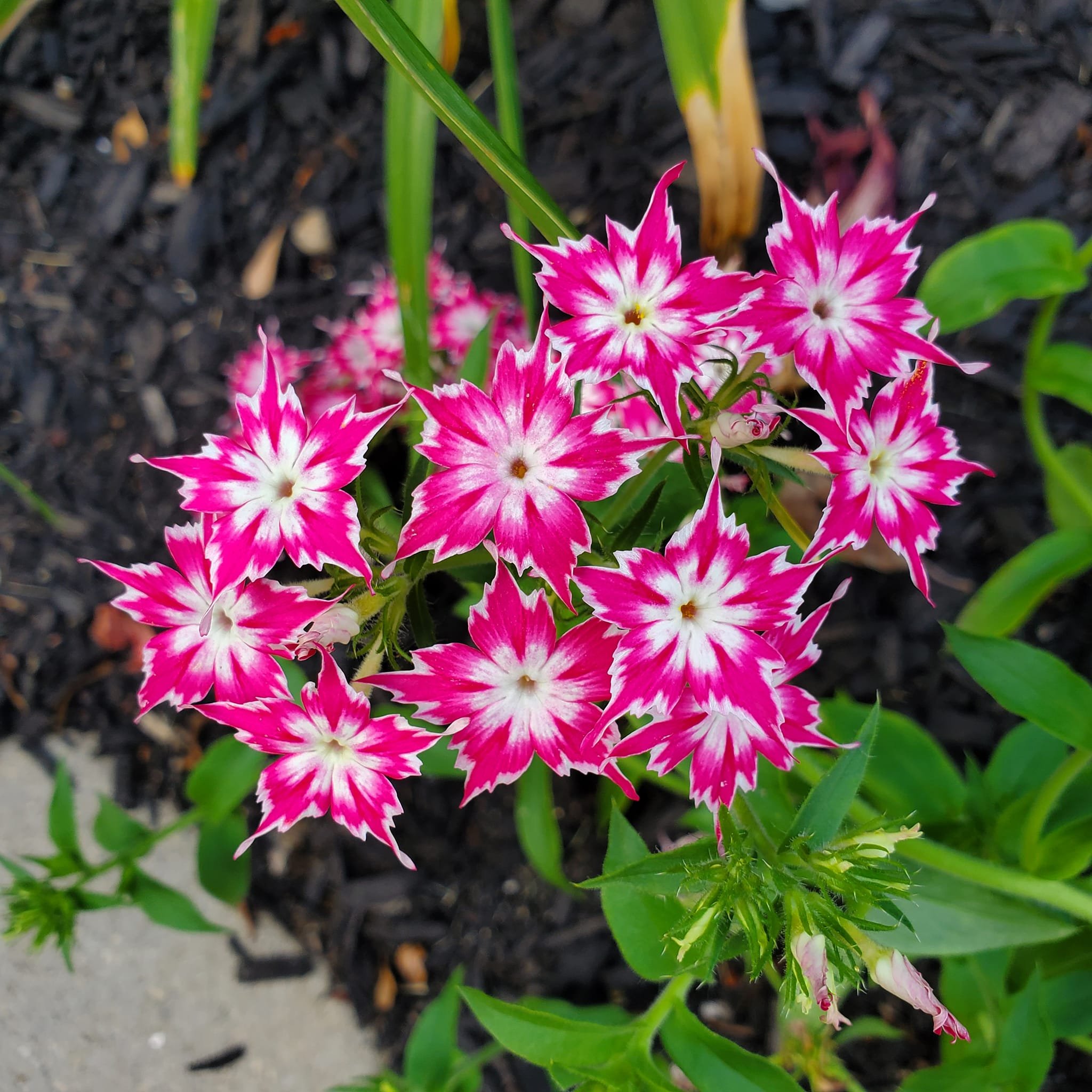
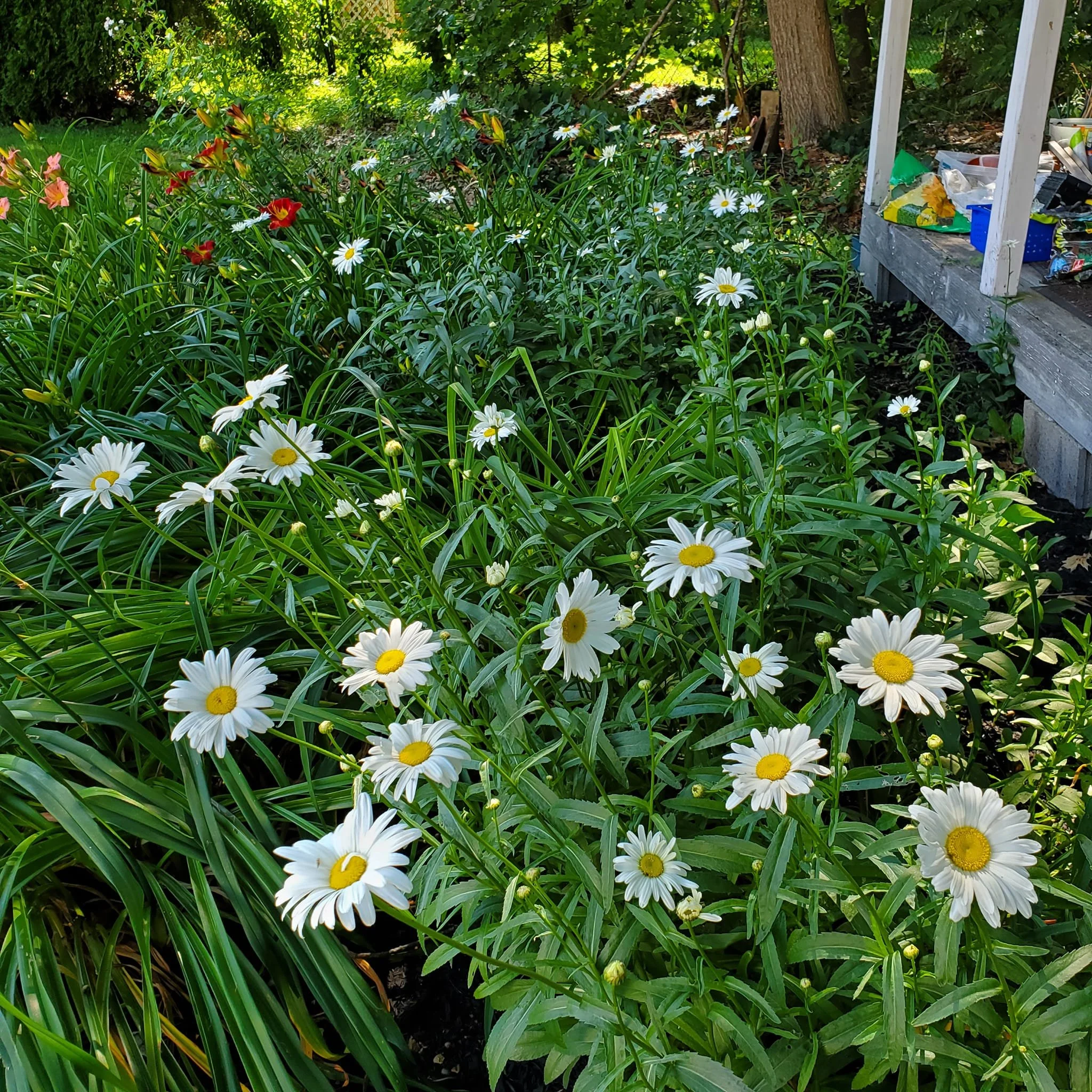
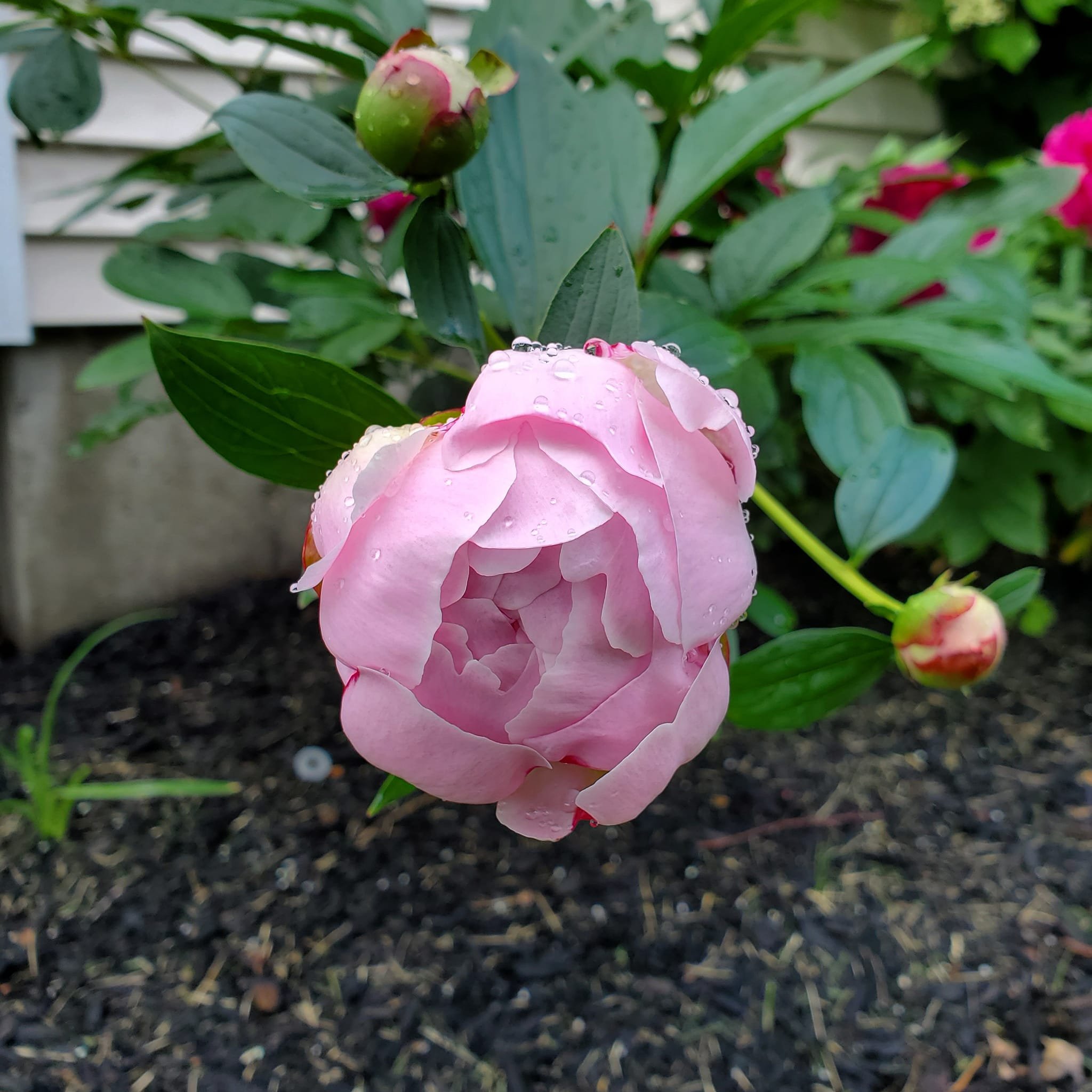
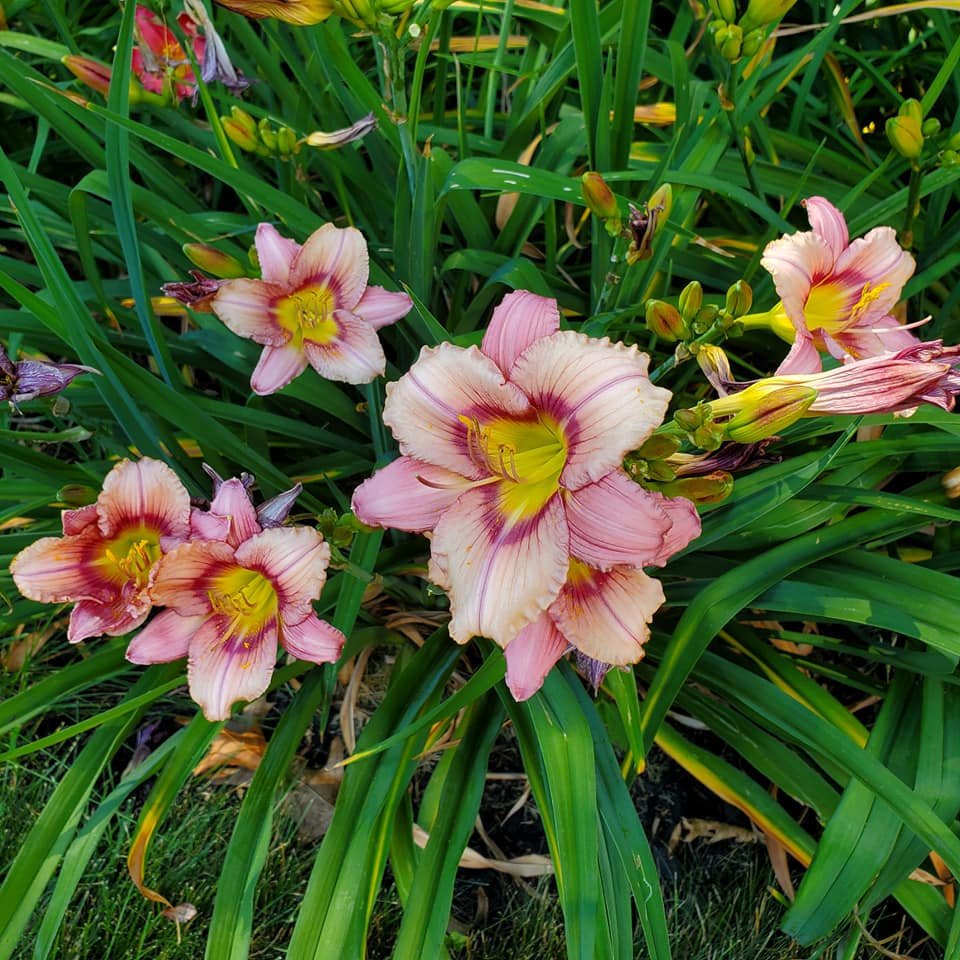
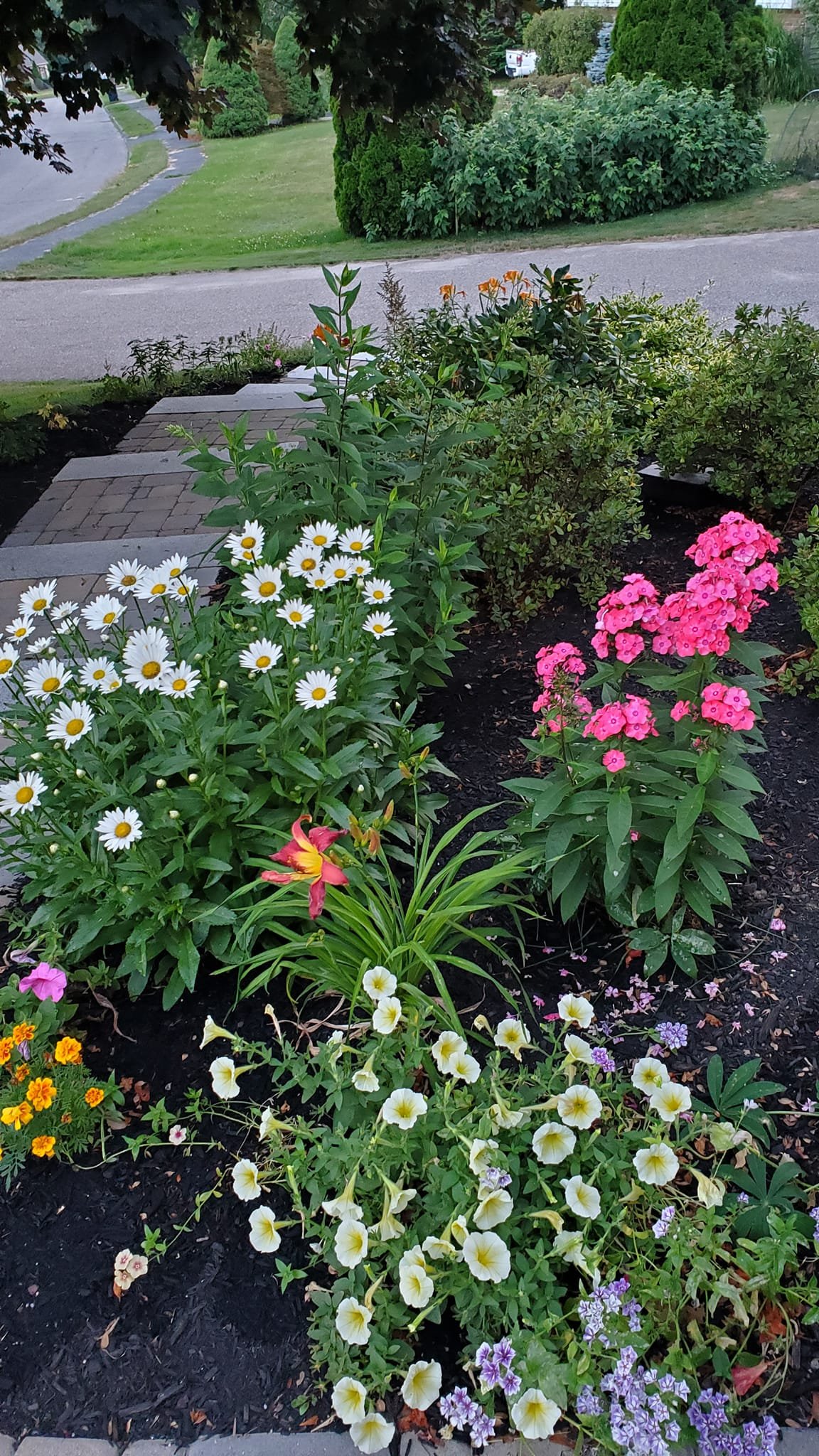
Though I have an organized personality, my gardens are a bright rainbow and have been a trial-and-error project for nearly fifteen years. Purple, white, yellow, and pink dominate my color palette. Do you want an overflowing garden, or do you want it evenly spaced out? I have country-style, standalone flower beds full of flowers, whereas my walkway beds are evenly spaced and mostly symmetrical. What colors do you want in your garden—vibrant or subdued? Do the blooms change color over time (my Pee Gee hydrangeas go from white to soft pink to rusty pink)? Consider spacing, patterns, shapes, textures and foliage. What will your garden look like in winter? Plant evergreens for your fourth season: winter. Check out some of my garden arrangements (because they are three-season gardens, only some blooms are shown in the photos).

Height and size

Flower height is important to consider (tall in back/middle/along fences, and shorter in front). If you are lining walkways, how tall is too tall? Fences are a great place to put tall flowers like orange daylilies, tall phlox, sunflowers, delphinium, tall asters etc. Likewise, size matters. Do the plants grow to massive mounds like wave petunias, or gigantic shrubs like hydrangea and euonymus? Are they groundcovers like creeping phlox or thyme? Do they grow slow or fast? Note: some plants may need trellises or supports.

Soil and fertilizer

There is a science to soil and fertilizer. You can even send a sample out to be tested. A mixture of compost, peat, and topsoil works for most beds. Worm, ground beetle, centipede, and spider activity, fungi presence, root spreading, good water drainage, and dark crumbling soil are signs of healthy soil. Don’t forget to add those eggshells and coffee grounds! I feed my flowers twice a year with an 8-8-8 fertilizer (slow release), an acidic fertilizer for the azaleas, hydrangeas, and rhododendron, and monthly I spray them with my favorite “seaweed juice” (Neptune’s Harvest Fish & Seaweed).

A note about annuals

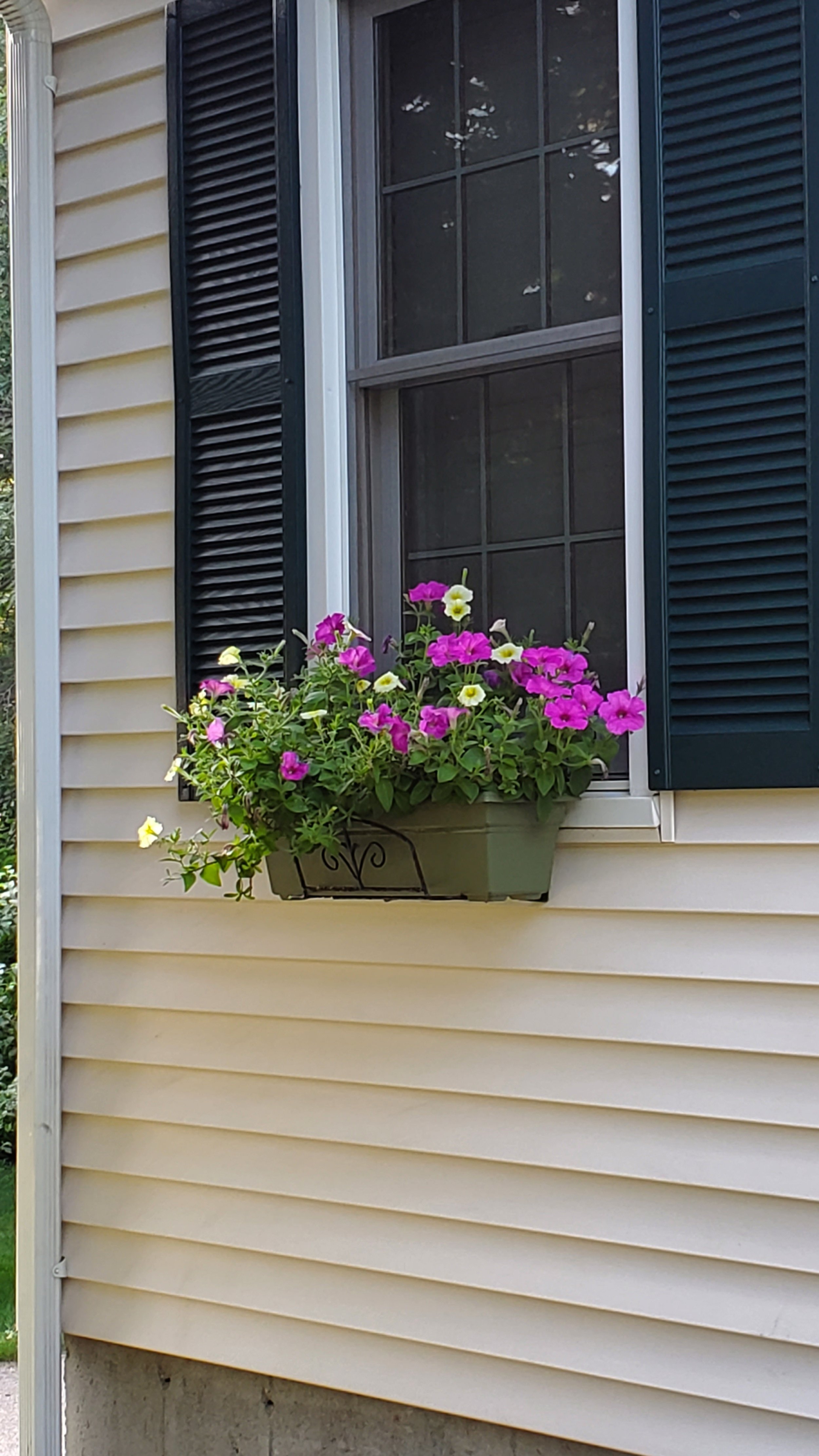
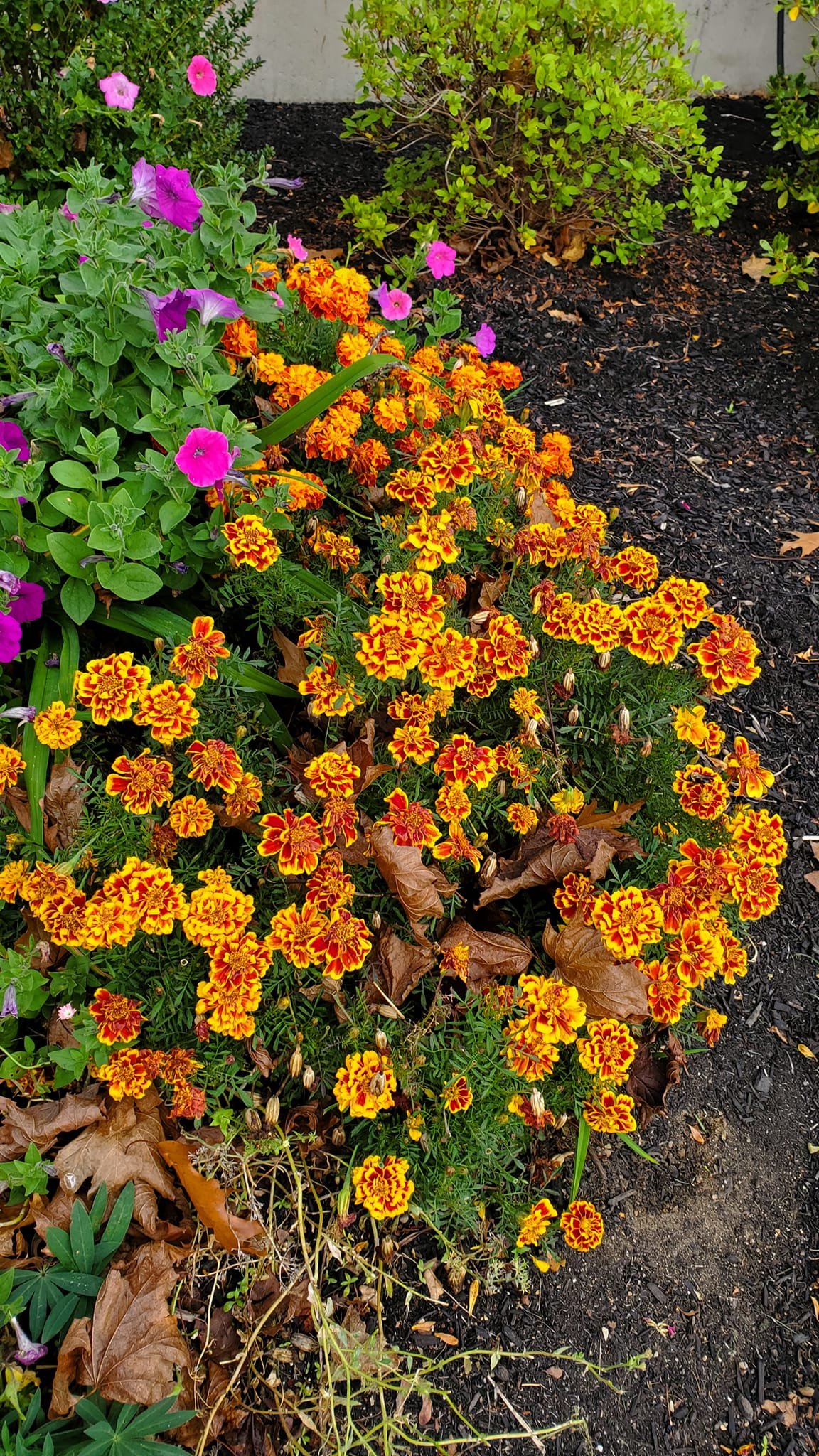
These flowers last one year. In warmer climates they can stay year-round, but typically you plant them each year (whereas perennials get pruned in the spring or fall and come back year after year). I fill in spots in my gardens, porch pots, and window boxes with petunias and marigolds. Geraniums are lovely and can “winter” inside. I also have tropical plants like mandevilla and hibiscus in pots.

What flowers bedazzle my gardens?

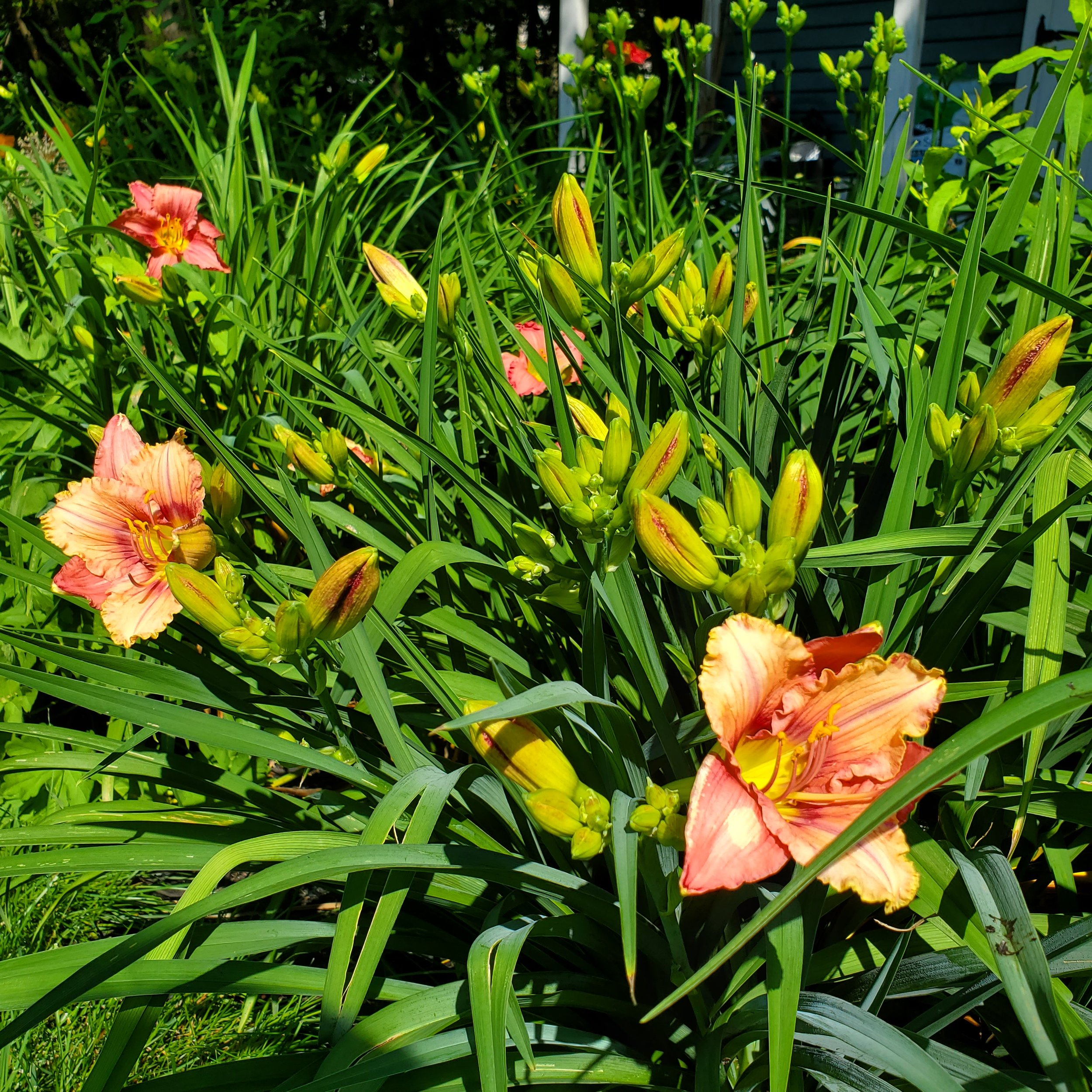
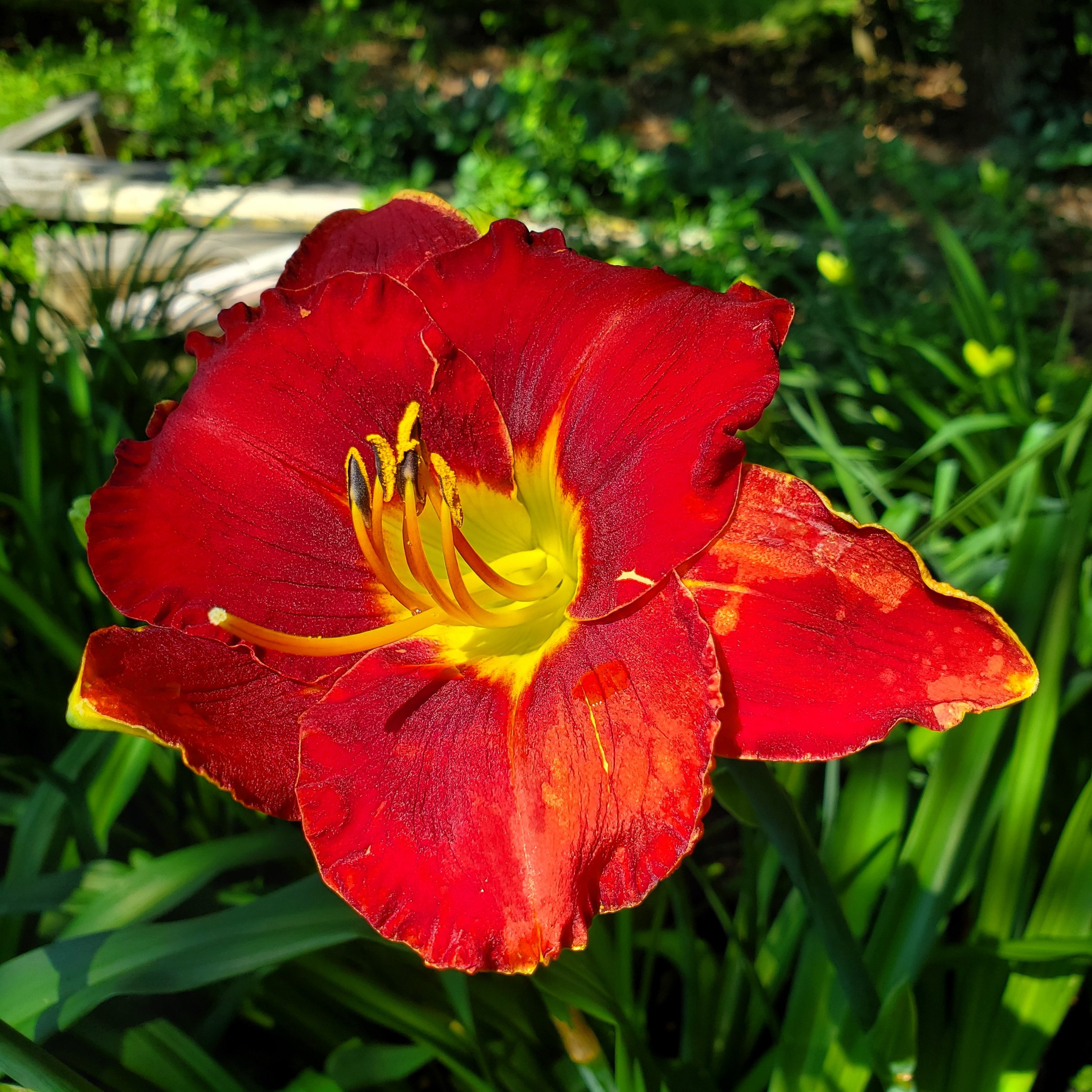
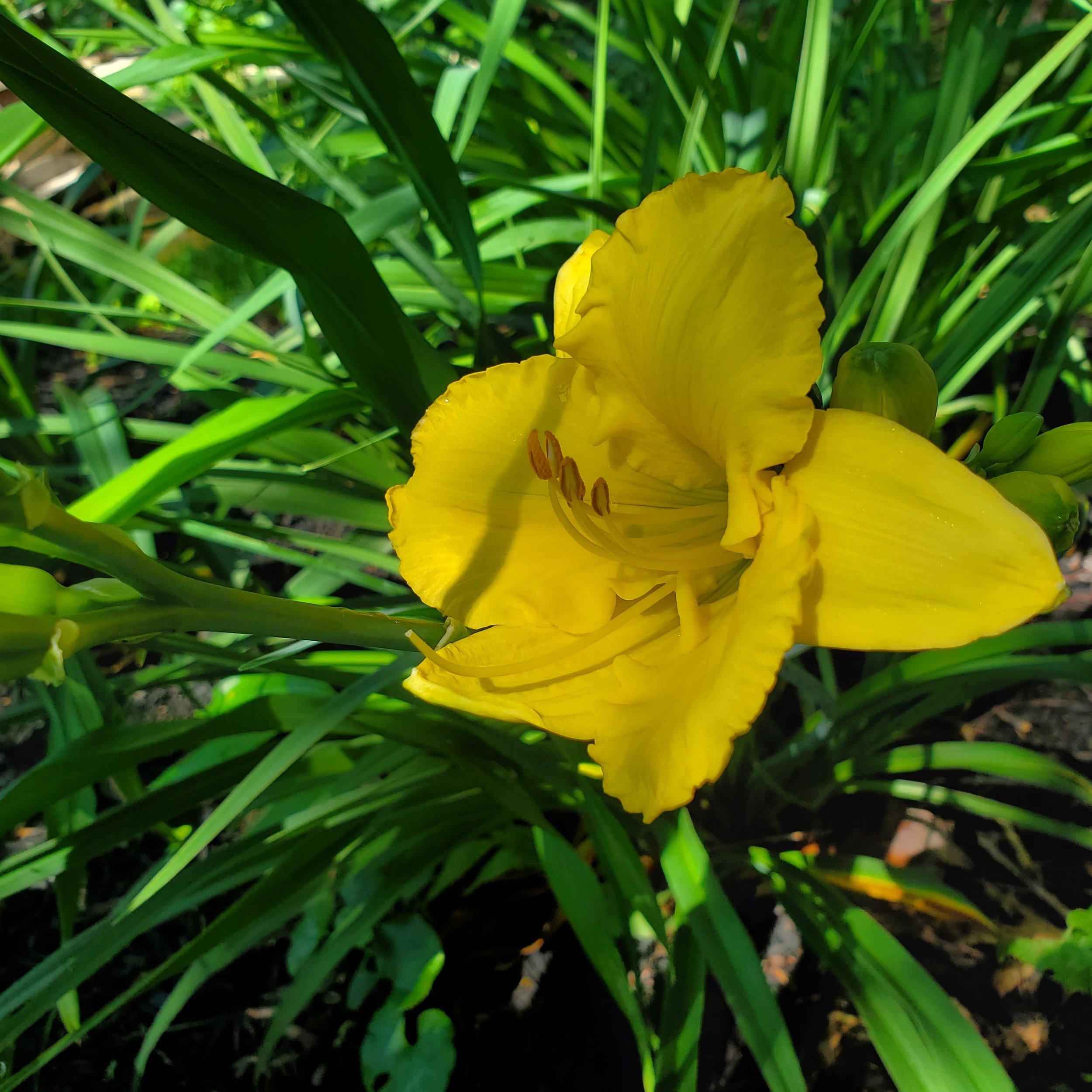
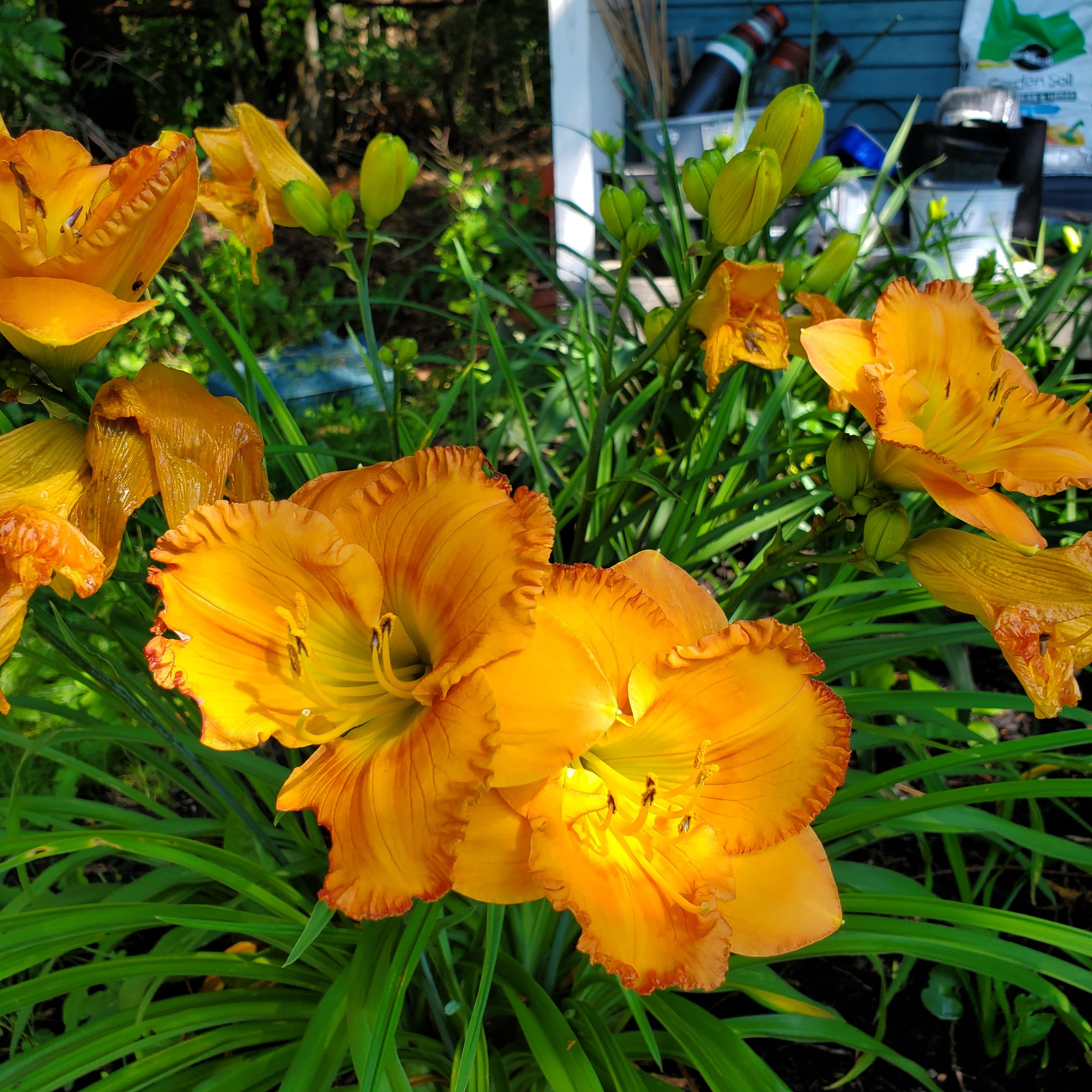
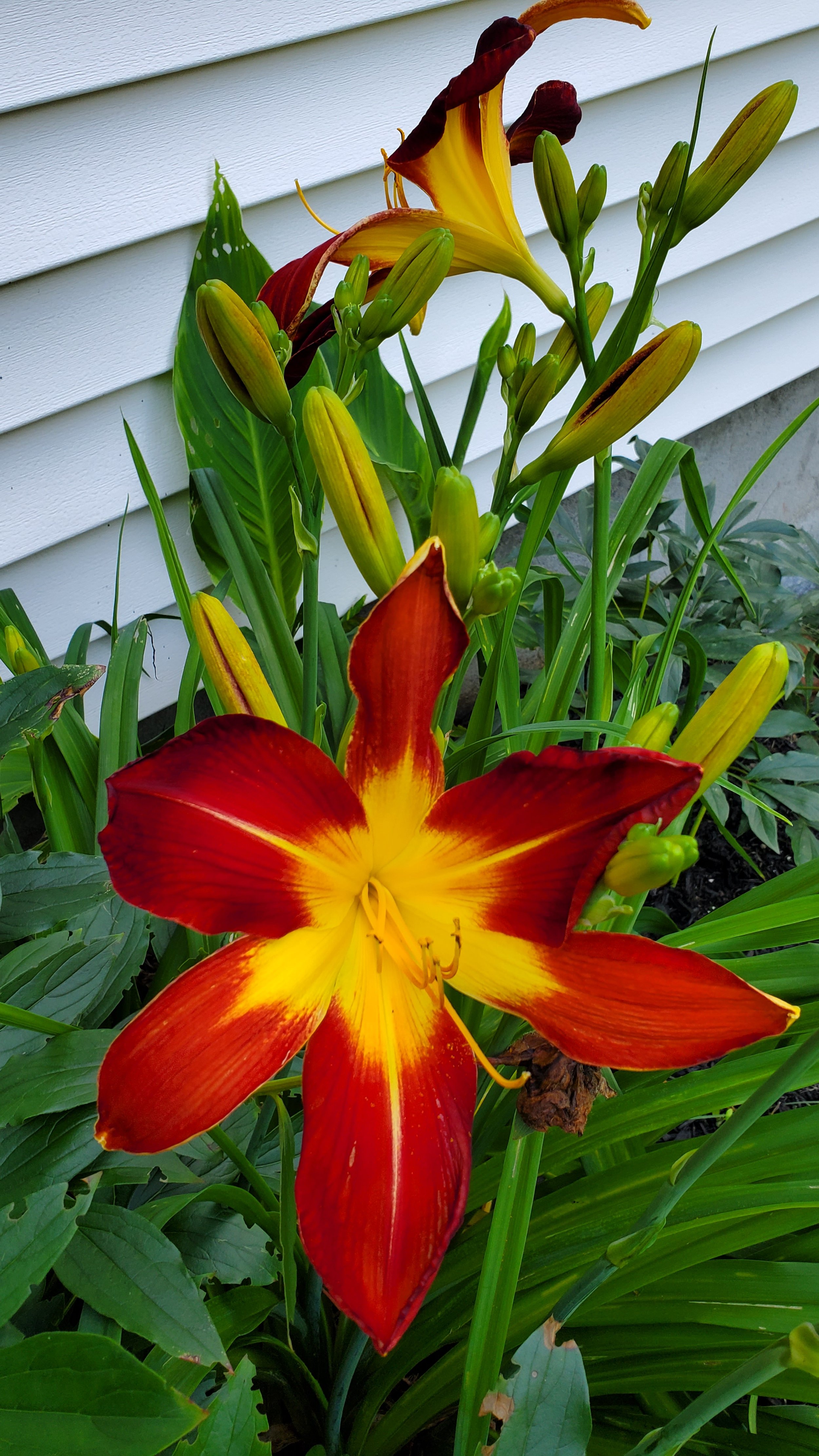
I’ve lost track of all the flowers I’ve planted. Here are some currently in my flower beds, pots, or boxes: Asters, astilbe, azalea, black-eyed (and red-eyed) Susan, bleeding heart, canna lily, catmint, coneflower, creeping phlox, coral bells, daffodil, daylily (about 12 variations), euonymus, geranium, holly, hydrangea (pee gee and creeping), iris (a variety), lady’s mantle, marigold, peonies, petunia, phlox (tall), primrose, rhododendron, sage, salvia, Shasta daisy…and more I can’t remember.

Now for a fun fact!

Did you know there are 10,000 daylily species? My favorite failure: lupine. They just don’t like my soil as much as I like them!

Final Tips…

·        Keep plants of similar irrigation/soil needs together.

·        Not sure what to plant? Ask at your local nursery. Plant nurseries in your area typically only carry flowers suitable for your region.

·        Let the tags guide you… Most plants come with a small tag indicating sun/shade, height, bloom time, and other pertinent details.

·        Don’t forget to plant flowers that attract pollinators.

Have specific gardening questions? Drop me an email through my website contact form. Join me next time to talk about vegetable harvests and fall pruning/planting. 

Find the shorter version of this blog as an article in “STILL MOMENTS MAGAZINE”

Gardening for the Soul Series Part 1: Starting Vegetable Gardens

Gardening for the Soul…

Me and my phlox! (Okay, it’s an artsy version of it - those are tall and robust purple phlox in all their fall glory!)

Here I am, in my small corner of the world, smack-dab in the middle of Massachusetts. This five-part blog series is for anyone who finds nature feeds their soul and for whom may want to learn a bit more about setting up vegetable, fruit, and flower gardens.

My experience: I’ve been obsessing over flower gardens for fifteen years, my berries/apples for about seven years, and I’m relatively new to vegetables, four years in now (thanks to impulse pandemic gardening). I only know what I know. My background is in science, and I now write novels full-time. The way I garden is only one way. I am no expert, but feel free to glean whatever information you can from my series…

Let’s talk about vegetables!

Find shorter version of this blog as an article in “STILL MOMENTS MAGAZINE”

From Seed to Seedling: Starting Inside

2025 update: My seeds this year. I’ve cut some veggies out this year (collards, shallots, peppers, etc) and have decided to do more annuals (zinnias, dahlia bulbs, my usual marigolds) and some nursery-bought six packs for lettuce and spinach.

Supply list: soil, spoon/cup/trowel for scooping, seed-starting trays with dome lids, or small pots/containers, seeds, a sunny spot, and sunny outlook!

Before you choose your seeds, your first assignment is to determine your season length (mine is late May through October in Massachusetts, but you can also plant some vegetables in fall for a spring harvest), hardiness zone, and first/last frost dates. Where you live impacts what you can plant. [P.s. I love using the Farmer’s Almanac online to answer my gardening questions]

Next, choose your vegetables! What do you want to eat? Climate and germination time determine your indoor planting date. I start slower growers in March (inside) and quicker growers in April (my final frost date is typically around the end of May). Seed packets usually give information on when to start inside.

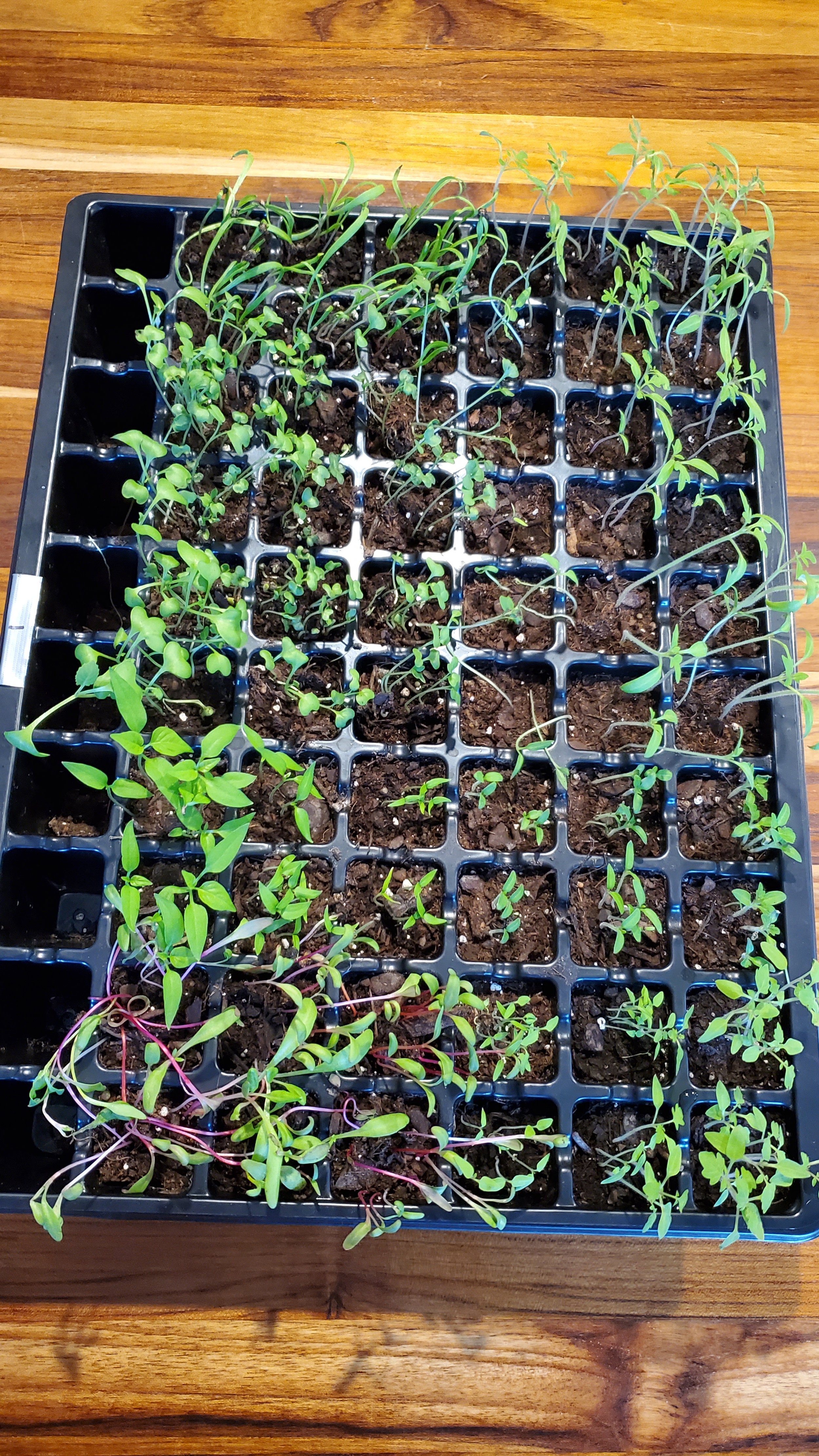
Here we go! Using seed starter or potting soil, plant the seeds in multi-well trays (like these). The bigger the seed, the fewer you put in each cell. Keep them watered and keep the dome on to contain moisture until seedlings pop up (like a little greenhouse), then remove the plastic dome. You can also use small pots, leftover yogurt containers, or biodegradable pots. Whatever works. If I know they will get big (e.g. cucumbers, zucchini, squash) I start them in three or five-inch pots. Some vegetables, like tomatoes and peppers, like heat for germination, so I use heat pads under my domed seed tray. For sunlight, hang lights over the trays, or place by/in a sunny window. I have a garden window in my kitchen. Once the seedlings graduate out of their little cells (a few weeks, depending on big they are), transplant them up to three or five-inch pots. You may need to divide some, or selectively thin out seedlings. Keep watering and feeding with sunshine!

My kitchen window gets west-north-east sunlight. As they grow out of these small wells, I move them up into 3 to 5 inch pots (top left), and then place them around my house by windows on raised tables (I have two good spots: west facing, and even north facing). As the plants grow and grow, aching to be transplanted outside (April, May, June), I always daydream about having a garden room or green house…one day, right?

Transplants and Direct Sowing

I transplant my seedlings to the gardens in May through early June. However, some seeds prefer to be directly sown outside because they are either too fragile (onions, lettuce), or get long and viney and can break upon transplant (beans, peas), or are vegetables that grow in the ground and need space (carrots, potatoes, onions/shallots). Some seeds swing both ways like lettuce, spinach, Swiss chard, collards, zucchini, and cucumbers. I buy lettuce already started in six-packs from a local nursery because my seedlings are too fragile with the wind of spring, and shallots/onions I buy as bulbs. Over the past few years I’ve done more outdoor direct sowing than starting inside.

Captain’s Log:

Mid-March: began marigolds, phlox, collards, swiss chard, peppers, tomatoes inside; grew celery from old cutting (it re-grows!), set up potato experiments inside

April: directly sowed peas, spinach, shallots, swiss chard, lettuce (pre-grown six packs from a nursery), and carrots outside; began cucumbers, squash, zucchini inside; moved collards outside

April to May: moved up seedlings as they grew out of wells; moved potatoes outside

Late May: transplanted tomatoes, peppers, cucumbers, squash, cucumbers, marigolds, and celery outside; directly sowed green beans

June: directly sowed a few more cucumber, squash, and zucchini to replace those lost from hot/freeze temps

2025 update: What’s my plan this year?

Since I’ve cut back on the veggie species I plant, I now compensate by planting a variety of strains within each veggie (e.g. three types of green beans, two types of zucchini)

Starting from seed inside: a variety of tomatoes, zinnias, marigolds, Swiss chard

Directly sowing seeds/bulbs: a variety of green beans, peas (snow, snap), cucumbers, zucchini, Swiss Chard, carrots

Six-packs from nurseries: lettuces and spinach

Designing Your Square-foot Companion Bed

Have less space? Daunted by the idea of huge gardens? Never fear…the answer lies in square-foot companion gardens. Simply put, each square foot of a raised bed (wood or metal framed “boxes” of any shape or size) is designated for a different vegetable. For those that love grids, this is fun! Here’s a guide on how many seeds/seedlings to plant per foot. All you need is a smidge of space in your yard with good sunlight (my two raised beds are 4x8’ each and get west and south sunlight).

My planting schematic. 2 raised beds, and a bunch of grow bags or containers (even window boxes) on my back deck.

Benefits of a raised bed include weed control, better drainage, soil control, and rodent protection (line the bottom with hardware cloth). I use PVC pipe arches and bird netting to cover my raised beds during the seedling phase (and sometimes all season long—I am very protective of my plants). Some vegetables need support (e.g tomatoes, peas): use trellises, cages, or poles. Some vegetables like space so give them plenty of room (e.g. collards, broccoli, squash, zucchini, cucumbers).

What is companion planting? Like siblings who don’t get along, you want to keep certain vegetables apart and certain ones close (they thrive off each other and help keep pests at bay). Do a little reading online to determine who likes or doesn’t like who.

What about containers? If you can grow it in a raised bed, you can grow it in a pot, growing bag, window box, or bin! Experiment. I’ve done tomatoes, cucumbers, zucchini, green beans, lettuce, spinach, and Swiss chard all in containers. This year: collard greens.

What about soil and fertilizer?

I’ll admit I’m still perfecting my ideal soil. My seeds start in a seed-starting soil mix or a potting soil with plant food (e.g. Miracle-Gro). My raised beds have “raised bed” soil specific for vegetables and herbs. I mix in compost (bagged or you can get it from local farms). Add in kitchen scraps like coffee grounds, eggs, or material from your own compost bin. I’ve added perlite to my potato experiment this year. Worm castings are also recommended (I just bought those this year). I spray my flowers and vegetables with fish and seaweed fertilizer a few times per season. There are lots of “plant foods” out there to choose from. I also top my soil bed with mulch.

This is what the garden beds look like now in early June. Plants can be moody, and we’ve had some hot, hot 90-degree days, and some bitter cold nights (even a freeze, where I had to cover them) and wet 40s stretch currently. As a result, half of my tomatoes are on their last limb (vine?) and a few of my cucumbers/squash look poorly. I directly sowed more squash/zucchini/cucumber seeds last week. They are fast growers, so I hope that makes up for the few that may not recover. Plant Experimentation is my middle name!

2025 update: This year’s data log. I also print the year’s frost dates from the Farmer’s Almanac, and will create a new garden design (I rotate locations in the raised beds), and keep notes for next year. So much of growing depends on variables outside our control: the weather! Wet, drought, late/early frosts…

Final Tips…

·         Don’t be afraid to experiment. We learn from everything we do. I’m a former scientist so trial and error and tweaking are my jam!

Harvest! More to come in the fall when I talk about harvesting and storage.

·         Take notes! Keep a notebook or binder with highs/lows, dates, and other information useful for next year. I create a spreadsheet to keep a log of my seed start/transplant dates (which is helpful for the next year).

·         Add flowers to keep pests away (e.g. marigolds, nasturtiums).

·         Most seed packs have instructions on when/how to start seeds inside or outside.

·         Choosing seeds? I try to buy heirlooms as much as I can, and I shop from a few regional online/mailer catalogs, but you can get seed packs at any garden center, too, or even on eBay.

·         Some vegetables can have a second harvest (e.g. the early spring vegetables like lettuce, peas, and collards can be planted again in late summer for a fall harvest). Want longer harvests? Try succession planting (for example: keep planting lettuce every 3-4 weeks for a long harvest).

Have specific gardening questions? Drop me an email through my website contact form.

Coming soon:

Part 2 (July): Setting up Perennial Flower Gardens

Part 3 (August): Fruit Extravaganza (berries and apples, oh my!)

Part 4 (September): Harvesting your Veggies & Planting for Late/Second Harvests

Part 5 (October): Pruning Your Perennials and Preparing For Winter (veggies & flowers)


Seeker is here!

It’s here! Time to party!

Yes, there was cake! I dabbled with an ombre and naturally wanted to pipe buttercream thistles on top!

Find it on Amazon - ebook, in Kindle Unlimited, and as paperback: HERE.

What is SEEKER about?

Journey to 14th century Scotland:

An ambitious archer.

A future war chieftain.

Rivaling clans.

A magical mortar and pestle.

Can her arrow secure peace? Will it find love?

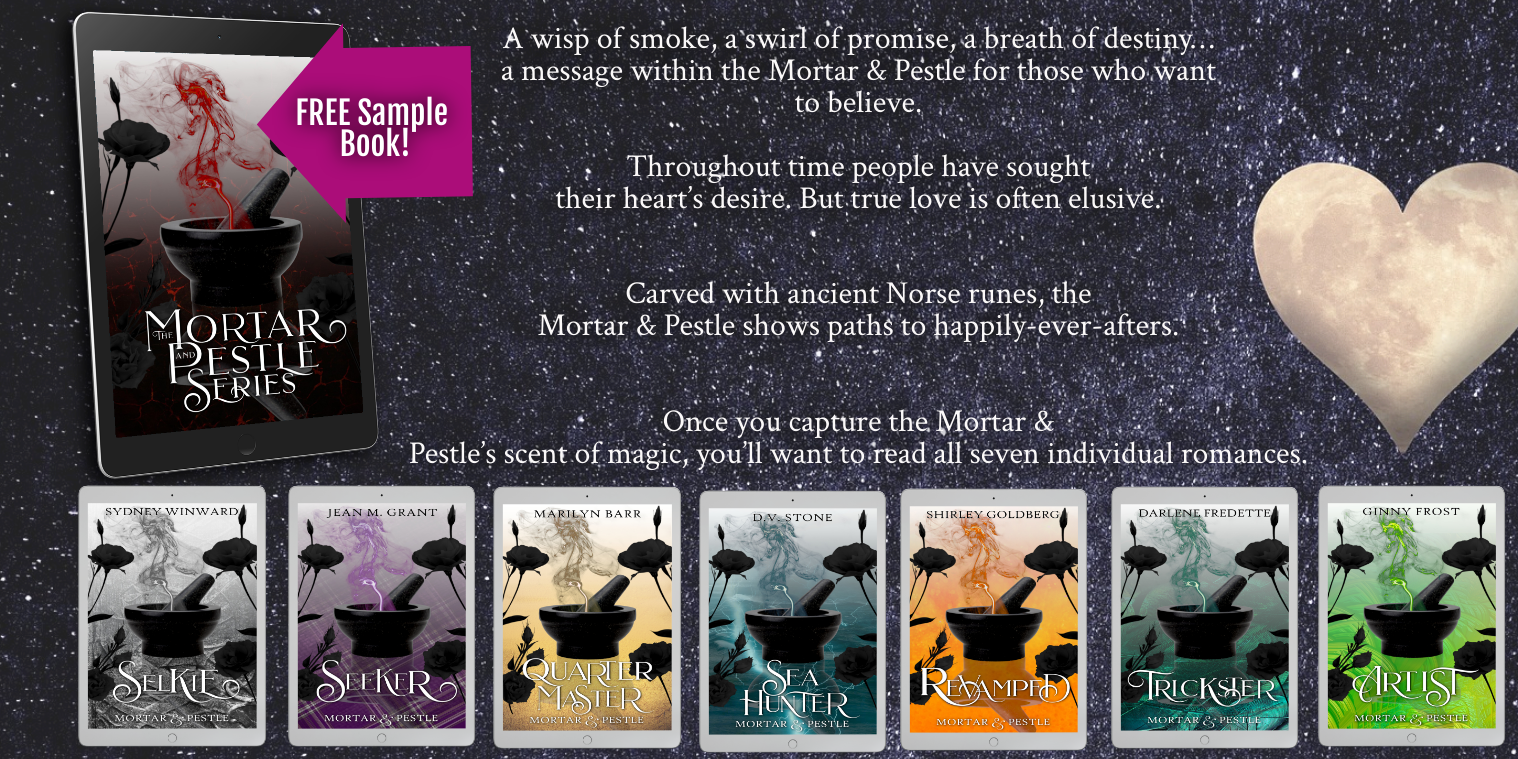
And don’t forget to check out the other books in the Mortar & Pestle series - collect them all!

A sneak peek into Seeker

WOOT! The cat is out of the bag! My new book, SEEKER is coming out March 9th! This medieval Scottish romance is part of a 7-book series that spans time and genre - from castles to pirates to modern day vampires, artists, and treasure hunters. The series has a bit for everyone.

If you’ve not yet subscribed to my newsletter, it’s loaded with info.

Newsletter subscribers always get an earlier sneak peek plus get access to other free and fun opportunities. :)
Now for that book…

Seeker: Nock, draw, release. Can she unite her clans before it's too late?

〰️

Seeker: Nock, draw, release. Can she unite her clans before it's too late? 〰️

Aileana Montgomerie’s bloodline holds valuable gifts of foresight and healing, but with each honor comes a curse. Even though she is descended from the mystical isles’ folk, she lacks the ability of the Scottish Ancients and wonders if she belongs in a magical family. Aileana just wants a purpose. What good is her bow and arrow if she is denied the right to fight for her clan?

Brodie MacDougall is ordained to be the next war chieftain of his clan. The title is a privilege as long as his brother, the future laird, doesn’t expect him to lift a sword and charge into battle. Chronic pain and nervous vapors force him to spend his days alone. Can his strategic skills keep him one step ahead of his conspiring brother?

Through a magical Mortar & Pestle, Brodie finds his heart’s desire. But there’s a catch. The seat on his brother’s council is no longer dependent upon his health…but on Aileana’s strength. With rumblings of unrest among their clans, will their love foster an alliance or be a step toward war?

Preorder SEEKER now through March 8th at 99¢!

Do you like to read and write reviews? Sign up to be an ARC READER for SEEKER.

The Mortar and Pestle series…

Find the SERIES online All now for pre-order!